
(And why the microbiome is getting so much attention)
If you're parenting a child with food sensitivities, eczema, tummy aches, or a body that seems to react to absolutely everything, you've probably heard someone mention the gut microbiome.
Usually right around the time you're wondering why your child could eat one cracker yesterday but not today, or you’re at your wits end trying to think of meals they wont react to.
So here’s the thing..
Your child's gut microbiome is a big (yet very tiny) community of microbes living in their digestive system, and it plays a surprisingly huge role in how their body works. These microbes help break down food, produce nutrients, interact with the immune system, and influence how the body responds to inflammation. They even communicate with the brain through the gut brain connection.
So when we talk about gut health in children, we're not just talking about digestion. We're talking about an entire ecosystem that is constantly interacting with the rest of the body. And the fascinating part is that this ecosystem is still developing throughout childhood.
Your child's microbiome is under construction
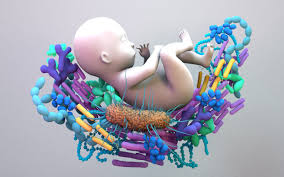
Babies aren't born with a fully developed microbiome. Instead, their gut ecosystem begins forming from the moment they enter the world and continues to evolve rapidly in the early years of life. Research suggests that the first three years of life are one of the most important windows for child gut microbiome development, with microbial diversity increasing significantly during this time before becoming more stable later in childhood.
In the beginning, a baby's gut contains relatively few microbial species. Over time, more microbes begin to colonise the gut, gradually building a more diverse and resilient microbial community.
Think of it like planting a garden.
At first there are just a few plants. Then more varieties begin to grow. Eventually the garden becomes richer, more balanced, and more resilient. Your child's gut is doing something very similar.
A lot of things shape this ecosystem
We often assume gut health is only about food. Food absolutely matters, but it's actually just one piece of a much bigger puzzle.
And if you've ever watched a toddler lick a playground railing or eat something mysterious off the floor, you'll know children interact with microbes in ways science is still trying to keep up with.
Many different factors influence how a child's microbiome develops, especially in the early years of life. Some of the biggest influences include:
• Birth method
• Breastfeeding or formula feeding
• Antibiotic exposure
• Early diet and fibre intake
• Environmental exposure to microbes
• Illness and infections
• Sleep patterns and stress
Even things like having siblings, playing outdoors, interacting with pets, and being exposed to different environments can influence the microbes a child encounters. All of these experiences help shape the ecosystem that develops inside the gut. Which means every child's microbiome ends up looking slightly different, just like every child is different.
The early years are especially important
During infancy, the gut microbiome often looks very different from that of an adult. In many babies, the gut is dominated by a group of bacteria called Bifidobacterium. These microbes are particularly well adapted to digest components found in breast milk.
They play an important role in early immune development and help create a protective environment in the gut during infancy. As children begin eating solid foods, the microbiome gradually shifts from a milk focused ecosystem to one influenced by fibre, plant foods, and a wider variety of nutrients. This transition is a normal and healthy part of development. Over time, the microbial community becomes more diverse and begins to resemble the more stable patterns seen in adults.
So where do food sensitivities and skin issues come in?
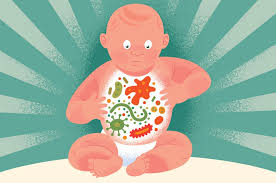
This is where things start to get particularly interesting. Because the gut microbiome is so closely connected to the immune system, changes in the gut ecosystem can sometimes influence how the body reacts to foods and environmental triggers.
Around seventy five percent of the immune system actually resides in and around the gut. That means the health of the gut environment can have a significant impact on how the immune system behaves. For some children, changes in the gut microbiome may contribute to things like:
• Food sensitivities
• Eczema or inflammatory skin conditions
• Bloating or tummy pain
• Constipation or diarrhoea
• Recurrent infections
• Increased inflammation
• Changes in mood or behaviour
Now the microbiome isn't the only factor involved in these conditions. Children's health is always influenced by many different systems working together.
But for some children, especially those experiencing eczema, food sensitivities, or ongoing digestive symptoms, looking more closely at the gut ecosystem can provide helpful clues about what might be contributing to those patterns.
What a gut microbiome test can actually show
When people hear about gut microbiome testing for children, they sometimes imagine a report that simply lists which bacteria are present in the gut.
In reality, modern microbiome mapping can provide a much more detailed picture of the digestive ecosystem. Testing can help us look at things like:
• Microbial diversity, which tells us how many different species are present
• Key microbial groups, including beneficial and opportunistic organisms
• Inflammation markers, which can give clues about irritation in the gut lining
• Digestive function markers, reflecting how well food is being broken down
• Microbial metabolites, which are compounds produced when gut microbes ferment food
Together, these markers help build a more complete understanding of how the gut ecosystem is functioning. This information can then help guide more personalised strategies around nutrition, lifestyle, and gut support.
The goal isn't a perfect microbiome
This is something I often remind parents. There is no such thing as a perfect microbiome.
Children's gut ecosystems are constantly changing as they grow, try new foods, get sick, recover, and explore the world around them. What we're really aiming for is resilience. A microbiome that is diverse, adaptable, and able to recover when life inevitably throws a few curveballs at it. And since you're raising a child, you'll know that curveballs are very much part of the parenting experience.
The takeaway
If there is one thing I've learned working with children and gut health, it's this. The gut is always leaving clues behind. The challenge is that those clues don't always look like gut symptoms. Sometimes they show up as tummy pain, constipation, diarrhoea, or bloating. Sometimes they appear in places that seem completely unrelated to digestion, like eczema, food sensitivities, frequent infections, mood changes, or fatigue.
And sometimes the clues are subtle.
A child who struggles with certain foods.
A child who seems to react to everything.
A child whose body just seems to be working a little bit harder than it should.
The gut microbiome is constantly interacting with the immune system, the digestive system, and the nervous system. When something in that ecosystem is out of balance, the body often sends signals. The tricky part is that those signals don't always show up in obvious ways. That is why looking at the gut can sometimes help us understand a child's health picture a little more clearly. Children's bodies are incredibly adaptive. When we understand the ecosystem they're working with, we often discover there are many gentle ways to help support it.

Curious about your child's gut ecosystem?
If you're wondering how your child's microbiome might be shaping up, Sarah is our paediatric naturopath here at The Healthy Hormone Naturopath. She has undertaken additional training in paediatric microbiome assessment and works with families to explore gut health in babies, children, and teens.
Sometimes testing is helpful. Sometimes simple dietary and lifestyle changes are enough. Every child is different. But understanding the ecosystem inside the gut can often help explain why certain symptoms are showing up and how best to support a child moving forward.
If you're curious about whether gut microbiome testing might be helpful for your child, you're always welcome to reach out and chat with the clinic.